


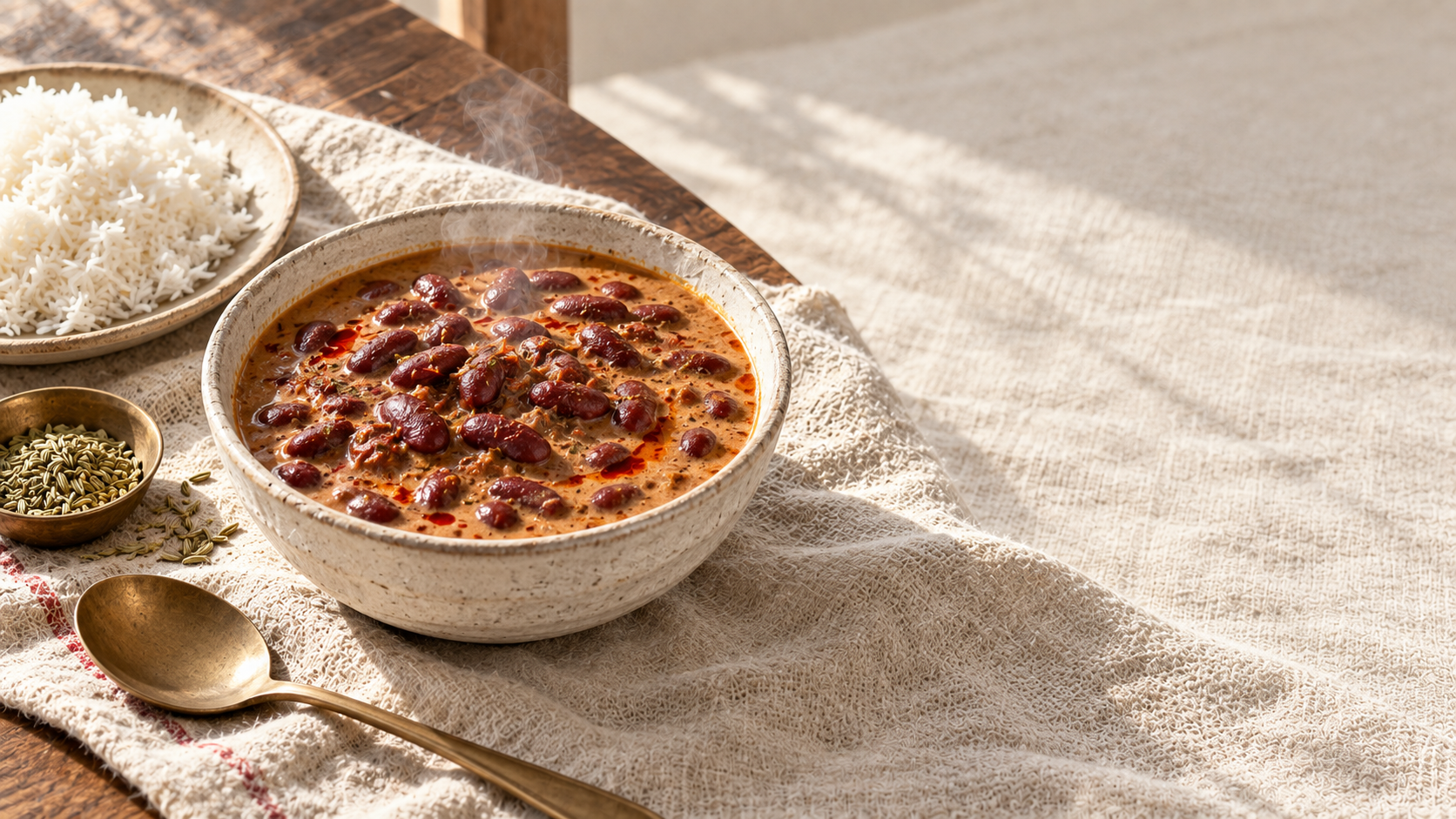
Picture this: it’s a cold Sunday, the pressure cooker has whistled eight times, and the rajma is still hard in the middle. You add more water. You add another whistle. By the time the beans give in, the gravy has turned to paste and lunch is an hour late.
The problem usually isn’t you. It’s the bean.
A real Kashmiri rajma recipe starts with small, fresh-season beans and asks for less than you’d expect: no onion and garlic in the classic version, a thin gravy instead of a thick one, and three quiet spices doing the heavy lifting. In this guide you’ll get the full recipe with exact quantities, the reason Bhaderwah rajma behaves differently in the cooker, the one safety step you can’t skip with any kidney bean, and a ver masala version for when you want something deeper.
Why Kashmiri rajma tastes nothing like Punjabi rajma
Most of us grew up on Punjabi rajma. Thick, onion-tomato heavy, rich with butter. Great dish. Just not this one.
Kashmiri rajma is lighter and more aromatic. The gravy is thin enough to soak into rice. Instead of a big onion-tomato base, the flavour comes from saunf (fennel), sonth (dry ginger) and hing (asafoetida), with Kashmiri chilli for colour and curd for body. As one widely followed recipe at Whisk Affair puts it, the fennel and dry ginger give it a taste you won’t find in other rajma curries.
Here’s the thing: that spice trio isn’t random. In the Kashmiri Pandit kitchen, hing, sonth and saunf stand in for onion and garlic across many dishes, a practice rooted in sattvic cooking, according to this account of the Pandit kitchen. Plenty of cooks do use onion, and Whisk Affair’s own version includes it, so you’ll meet both styles. We’ll give you the classic one first.
Key takeaway: Kashmiri rajma is a curd-and-fennel dish, not a tomato-and-onion one. Get that right and everything else follows.
The bean matters more than the masala
You can follow every step below and still end up with tough rajma if the beans are old or the wrong type. That’s why Kashmiri cooks are fussy about the bean itself.
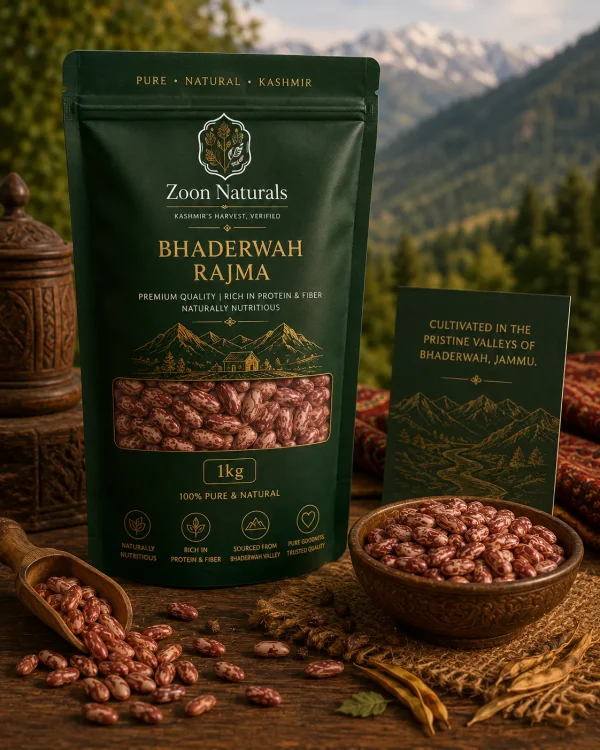
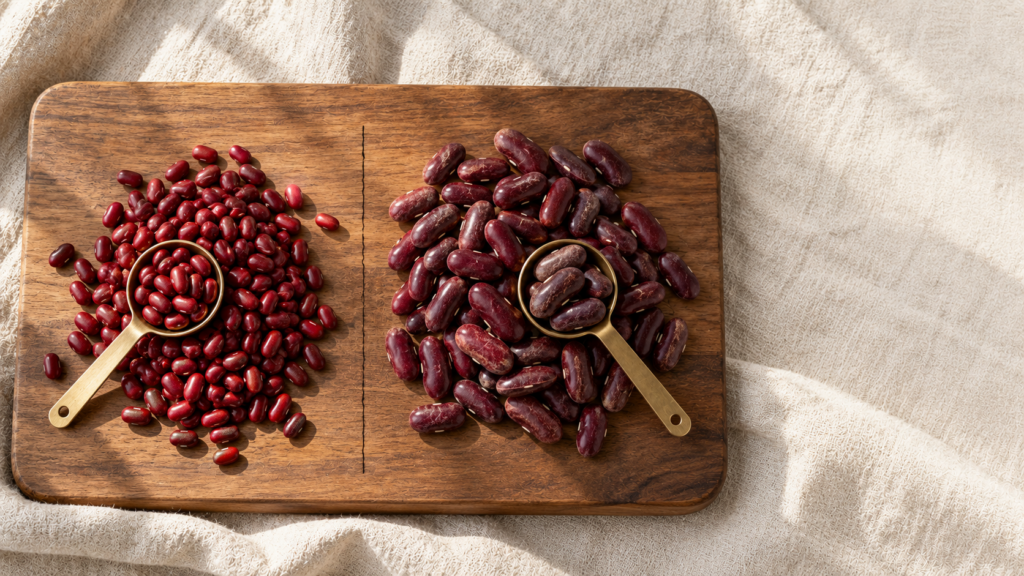
Bhaderwah rajma, a small-grained red kidney bean from the Chenab valley in Jammu and Kashmir, is the variety most people mean when they say “Kashmiri rajma.” It’s grown in Doda district, often as an intercrop with maize, and it’s known for its smaller size, distinct texture and sweet, nutty flavour, according to Kashmir Life. The variety received a Geographical Indication tag in 2023, as reported by The Tribune and All India Radio News. That tag recognises the bean and its region. It’s not a certificate any individual seller prints on a pack, so read GI claims on labels with care.
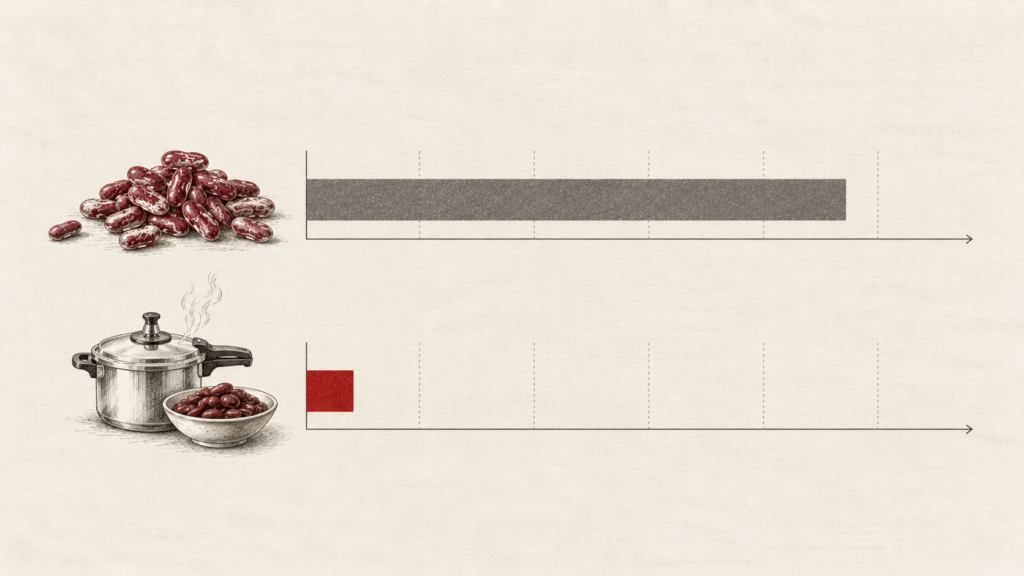
Small beans cook faster. Fresh beans cook faster still. Old stock, the kind that has sat in a warehouse for a couple of seasons, is what turns an hour of cooking into three.
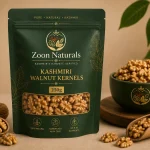
At Zoon Naturals we pack our Bhaderwah Rajma from the current season’s harvest and sort it by hand, in 1 kg packs. If you want the wider story of where it sits in a Kashmiri kitchen, our guide to Kashmiri pantry staples covers rajma alongside hokh syun, nadru and ver.
The one rajma rule you can’t skip: a proper boil
Before the recipe, one safety point. It’s short, and it matters.
Dry kidney beans of every kind, Bhaderwah included, contain a natural protein called phytohaemagglutinin, or PHA. Undercooked beans can make you properly sick. Food-safety guidance from Ohio State University notes that eating as few as four or five improperly cooked red kidney beans can cause severe vomiting within hours.
The good news? Heat destroys it. The same guidance says raw red kidney beans contain 20,000 to 70,000 haemagglutinating units, and proper cooking brings that down to 200 to 400. It recommends a full boil of at least 30 minutes and warns against slow cookers, which may not get hot enough.
So here’s how that plays out in your kitchen:
- Always soak, then drain and cook in fresh water.
- Cook in a pressure cooker or at a rolling boil, never in a slow cooker or a low simmer from cold.
- Test several beans, not one. Every bean should mash easily between your fingers before it goes into the gravy.
- Never add raw or half-cooked beans to a salad or tadka “to finish.”
This is general food-safety information, not medical advice.
The classic Kashmiri rajma recipe, step by step
This is the Pandit-style version, with no onion and no garlic. It serves 4 with rice.
For the beans
- 250 g Bhaderwah rajma
- 1 litre water for cooking, plus water for soaking
- 2 cloves, 1 small stick of cinnamon, 1 black cardamom
- 1 tsp salt
For the gravy
- 4 tbsp mustard oil
- 2 pinches hing (asafoetida)
- 1½ tsp Kashmiri red chilli powder, mixed with 3 tbsp water
- 1 cup (about 250 g) thick curd, at room temperature
- 1 tsp atta, whisked into the curd
- 2 tsp saunf (fennel) powder
- 1 tsp sonth (dry ginger) powder
- ½ tsp turmeric
- Salt to taste
- A pinch of garam masala to finish
Step 1: Soak. Rinse the rajma and soak it in plenty of water. Our pack suggests 2 to 3 hours for fresh-season Bhaderwah beans. If you’re unsure how old your beans are, a longer soak of five hours or overnight does no harm. Drain and discard the soaking water.
Step 2: Pressure cook. Add the beans, 1 litre of fresh water, the whole spices and salt to the cooker. Cook on medium heat. Fresh-season beans need far less time than store rajma, so open the cooker after the first few whistles and check. The beans are ready when every one you test mashes softly, with no chalky centre. Keep the cooking liquid. It’s your gravy base.
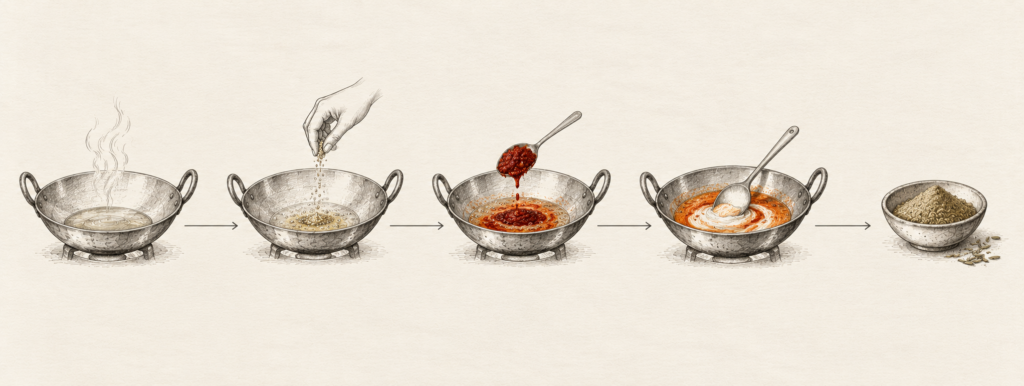
Step 3: Temper the oil. Heat the mustard oil in a heavy kadhai until it just smokes, then take it off the heat for a minute. This mellows its sharpness. Return it to low heat and add the hing. Ten seconds is enough.
Step 4: Bloom the chilli. Pour in the chilli-water paste and stir until the oil turns red and starts to separate, about 2 minutes. The water stops the chilli scorching.
Step 5: Add the curd, slowly. Whisk the curd and atta together until smooth. Lower the heat and add the curd a spoonful at a time, stirring constantly. The atta helps keep it from splitting, a technique Whisk Affair also recommends. Keep stirring until the curd darkens and oil shows at the edges, 4 to 5 minutes.
Step 6: Add the spices. Stir in the saunf powder, sonth powder and turmeric. Cook for one minute.
Step 7: Simmer. Add the cooked beans with about 2 cups of their liquid. Simmer uncovered for 12 to 15 minutes. Lightly mash a few beans against the side of the pan to give the gravy body, but keep it thin. It should pour, not sit.
Step 8: Finish. Check the salt, add a pinch of garam masala, and rest it for 10 minutes before serving.
The result? A bright, thin, fragrant gravy, beans soft enough to melt, and nothing fighting the fennel.
Where most Kashmiri rajma goes wrong
Few ingredients means small mistakes show.
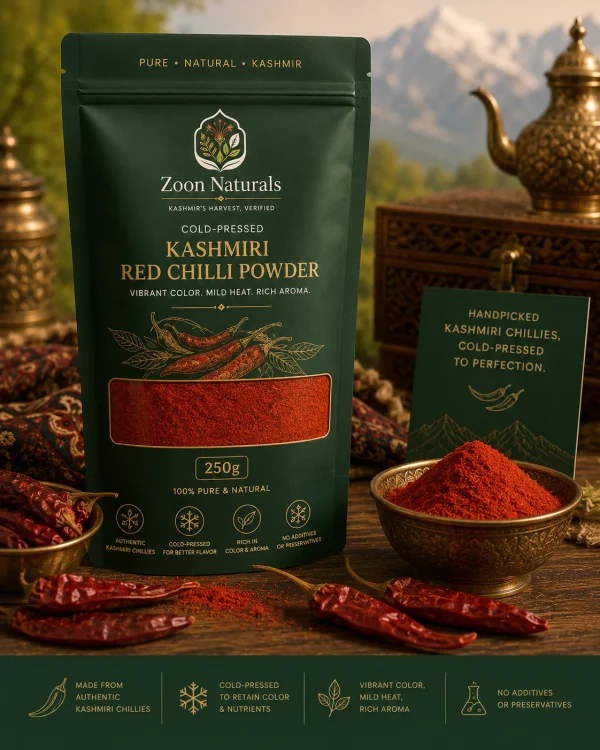
Using regular chilli powder. Hot chilli powders bring fire without colour. Kashmiri chilli is the opposite, deep red with gentle heat. Our Kashmiri Red Chilli Powder is stone-ground from sun-dried Kashmiri chillies with no added colour. If a powder stains everything instantly and costs too little, be suspicious.
Dumping the curd in cold. Cold curd plus hot oil equals split gravy. Room temperature curd, a little atta and low heat fix it.
Making it thick. Thick rajma is a Punjabi habit. Here, thin is correct. The gravy is meant to run into the rice.
Rushing the beans. If even one bean has a hard centre, keep cooking. Taste and safety both depend on it.
The ver masala version, for a deeper rajma
Want more depth without reaching for onion? Ver can do it.
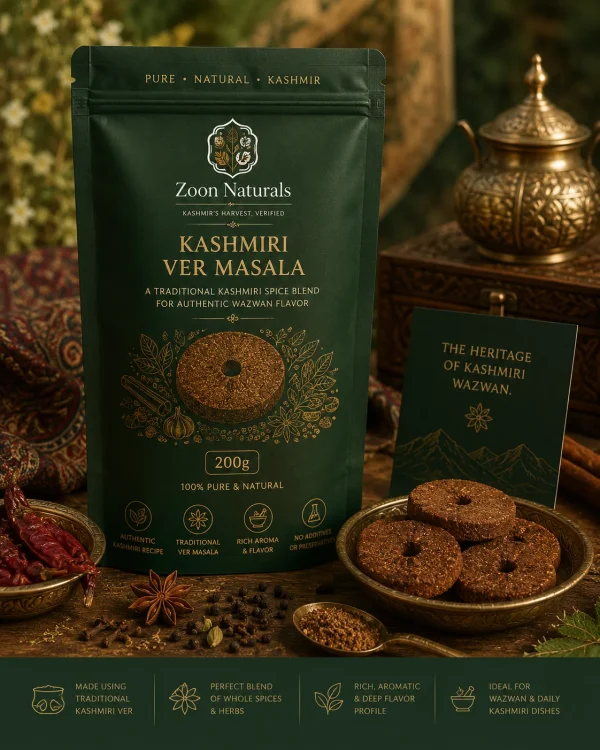
Ver is a sun-dried cake of ground spices, garlic and shallots that Kashmiri households make by hand. It contains garlic and shallots, so this version isn’t onion-and-garlic free. Our Kashmiri Ver Masala is made the traditional way in small batches, and rajma is one of the dishes it’s meant for.
To make it, follow the recipe above with two changes. After the hing in Step 3, crumble in 1 tsp of ver and let it sizzle for 20 seconds before the chilli goes in. Then halve the saunf and sonth, since the ver already carries spice. Start with less ver than you think. It’s concentrated, and you can always add a little more in the last five minutes.
The flavour is earthier and more layered. Same dish, different accent.
How to serve it, the Kashmiri way
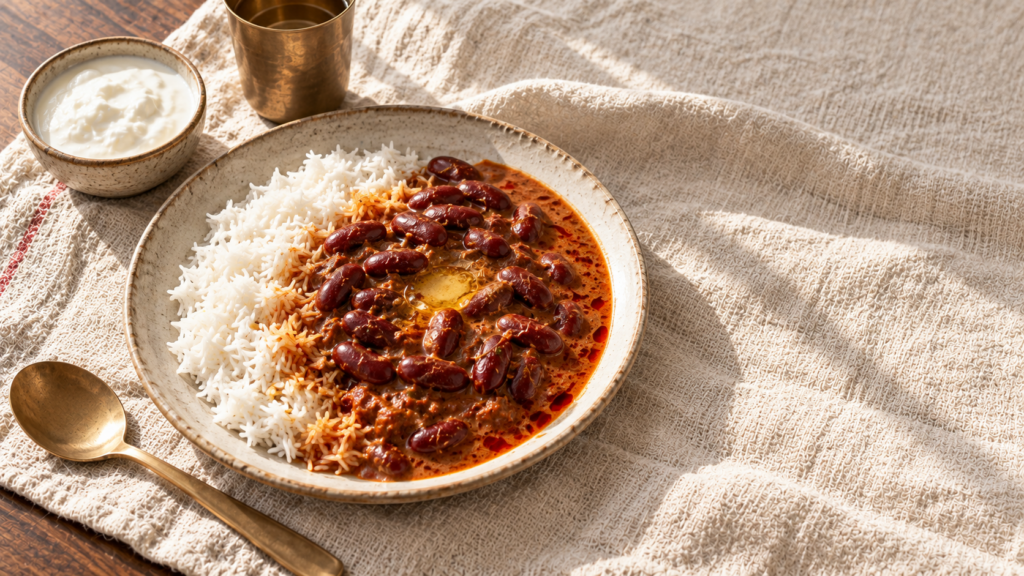
Serve Kashmiri rajma with plain steamed rice. That’s it. The thin gravy is built for rice, not roti.
A few small touches help:
- A spoon of ghee over the hot rice before the rajma goes on.
- A side of plain curd or a simple radish salad.
- A cup of Kashmiri kahwa after the meal, for a warm, light finish to a winter lunch.
Store leftovers covered in the fridge and eat them soon. Reheat until it bubbles, and add a splash of water, because the gravy thickens overnight.
The bottom line on Kashmiri rajma
Great Kashmiri rajma isn’t about adding more. It’s about adding less, and choosing well.
If your rajma always cooks hard, change the bean before you change the recipe. If your gravy splits, warm the curd and add atta. If it tastes flat, check your chilli and your fennel. And if you want depth without onion, crumble in a little ver.
Whatever you do, cook every bean until it’s soft all the way through.
If you’d like to try the recipe with small-grained beans packed from the current season, explore our Bhaderwah Rajma, or browse the rest of our Kashmiri spices.
FAQ
Q: What makes a Kashmiri rajma recipe different from Punjabi rajma? A: Kashmiri rajma uses a thin curd-based gravy flavoured with fennel, dry ginger, hing and Kashmiri chilli. Punjabi rajma uses a thick onion-tomato base. The Kashmiri Pandit version skips onion and garlic entirely.
Q: How long should I soak Bhaderwah rajma? A: Our pack suggests 2 to 3 hours for fresh-season Bhaderwah beans. If you don’t know how old your beans are, soak for five hours or overnight. Always drain and cook in fresh water.
Q: How many whistles does Bhaderwah rajma need in a pressure cooker? A: It depends on the age of the beans and your cooker. Fresh-season beans need far less time than store rajma, so check after the first few whistles. They’re ready when every bean you test mashes easily.
Q: Can I make Kashmiri rajma without onion and garlic? A: Yes. The classic Pandit-style recipe above uses hing, saunf and sonth in place of onion and garlic. Skip the ver masala version, since ver contains garlic and shallots.
Q: Is it safe to cook rajma in a slow cooker? A: Food-safety guidance from Ohio State University advises against it, because a slow cooker may not get hot enough to destroy the natural toxin in kidney beans. Boil or pressure cook instead. This is general food-safety information, not medical advice.
Q: Can I use ver masala in rajma? A: Yes. Crumble about 1 tsp into the hot oil after the hing, then halve the fennel and dry ginger. Ver is concentrated, so start small.