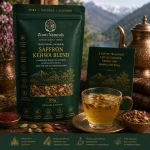
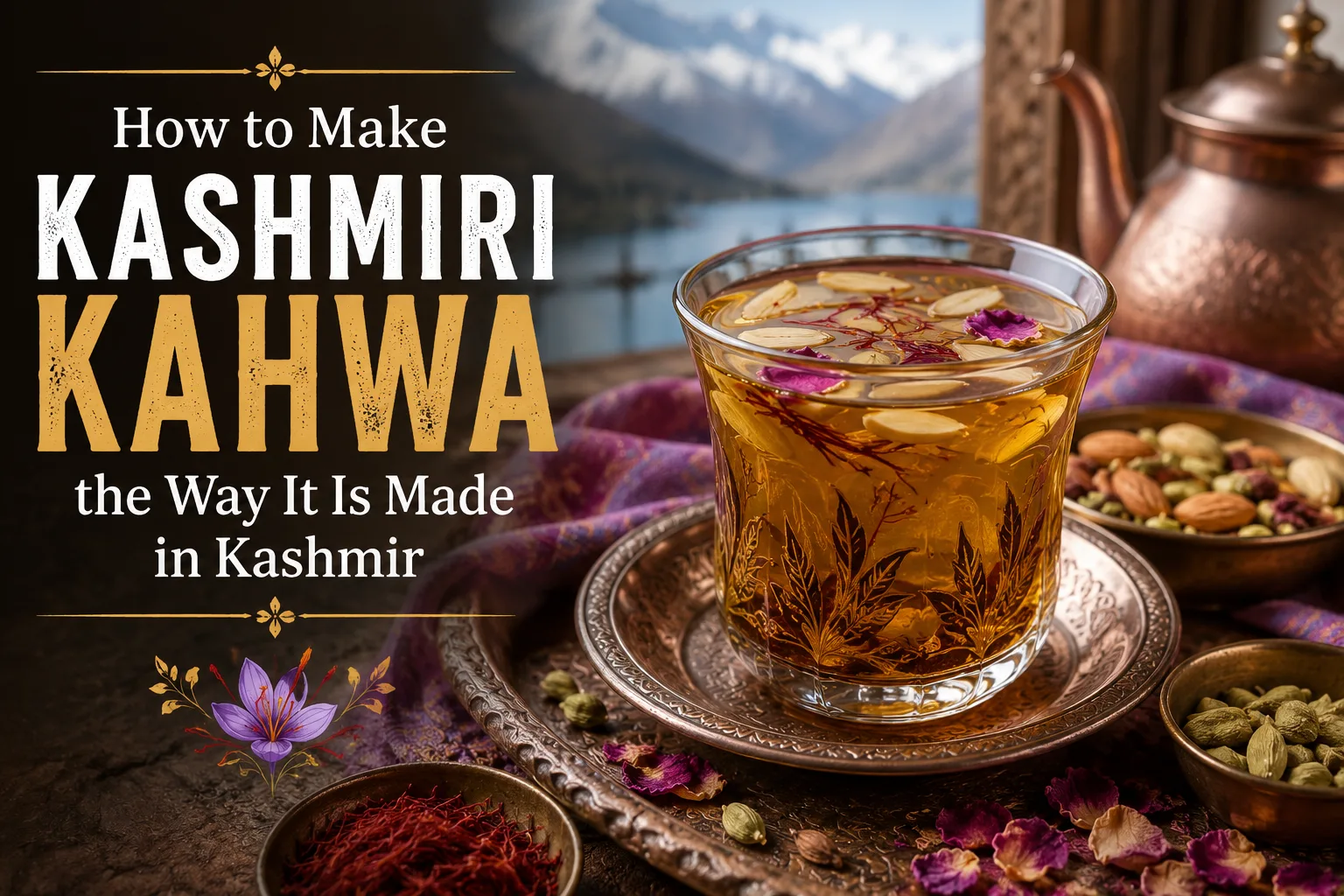
Most kahwa recipes on the internet get one thing badly wrong. They treat kahwa like regular green tea with some spices thrown in. Boil, dunk, done.
That is not how it works in a Kashmiri home. Kahwa is a slow brew. The spices simmer, the tea barely steeps, and the saffron never touches boiling water. Get those three things right and you get the golden cup people drink in Srinagar on a snowy morning. Get them wrong and you get bitter spice water.
Here is the method as it is actually made in the valley, plus the mistakes that ruin it.
What goes into a real kahwa
For two cups, you need surprisingly little:
- 2 teaspoons Kashmiri green tea leaves (bombay tea or any whole leaf green tea works)
- 1 small cinnamon bark piece, about 2 cm
- 2 green cardamom pods, lightly crushed
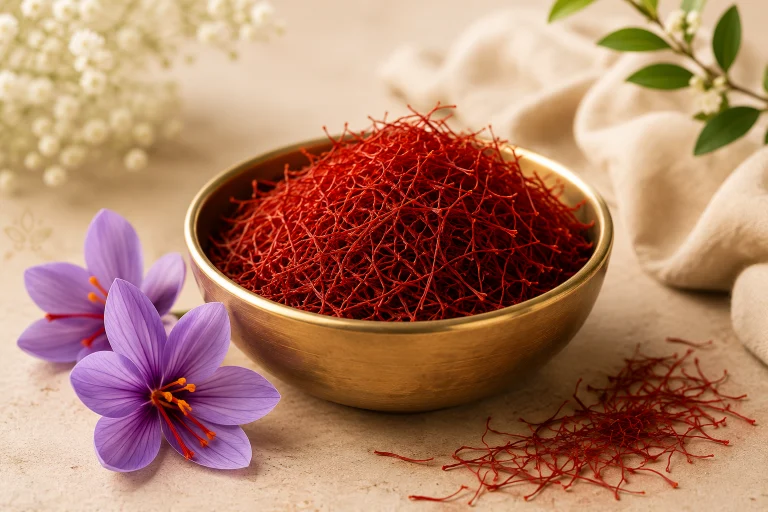
- 4 to 6 threads of real Kashmiri saffron
- 4 almonds, slivered
- Honey or sugar to taste
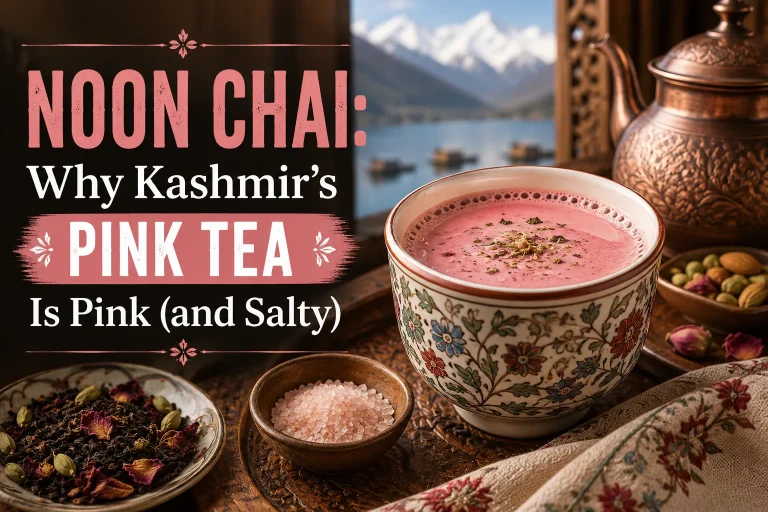
Notice what is not on the list: milk. Kahwa never takes milk. That is noon chai, a completely different drink.
The method, step by step
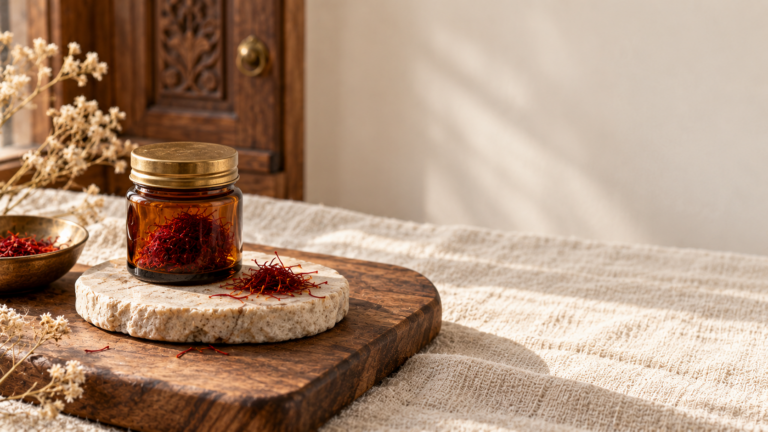
- Steep the saffron first. Put the threads in two tablespoons of warm (not hot) water and walk away for 15 minutes. This single step changes everything. Saffron releases its color and aroma slowly, and boiling kills both.
- Simmer the spices. Bring two cups of water to a gentle boil with the cinnamon and cardamom. Let them simmer for 3 to 4 minutes so the water takes the spice.
- Kill the heat, then add the tea. Turn the flame off, add the green tea leaves, cover, and wait 2 minutes. Not more. Green tea steeped in boiling water for five minutes turns bitter, and no amount of honey fixes bitter.
- Strain into cups, then add the saffron water with its threads, the almond slivers, and honey.
Total time: about 20 minutes, and 15 of those are the saffron quietly doing its job in a small bowl.
The three mistakes that ruin kahwa
Boiling the saffron. Heat above roughly 60 degrees starts breaking down safranal, the compound that gives saffron its aroma. If your kahwa smells of nothing, this is why. Our guide on how much saffron to use covers steeping in detail, dish by dish.
Using too much saffron. Four to six threads per two cups is enough. More does not make it more luxurious. It makes it medicinal and adds a bitter edge.
Using fake saffron. This is the big one. A large share of loose saffron sold in Indian markets is dyed safflower or corn silk. It colors the water instantly and adds zero aroma. Real saffron releases color slowly, over several minutes. If you are not sure what you have, run the simple tests in our guide to identifying real Kashmiri saffron.
Why kahwa earned its reputation
Kashmiris have poured kahwa from samovars for centuries, long before anyone used the words wellness drink. The base is green tea, and green tea is one of the most studied beverages on the planet. Large reviews, including work catalogued on PubMed, link regular green tea consumption with modest benefits for heart health and metabolism. Saffron brings crocin, the carotenoid responsible for its color, which is being studied for mood and sleep support.
None of that makes kahwa medicine. It makes it a warm drink with a serious pedigree, and honestly, the taste is reason enough.
A note on the saffron you use
Kahwa is the most saffron-forward drink there is. There is nothing to hide behind, no cream, no heavy sweetness. Whatever saffron you use, you will taste it.
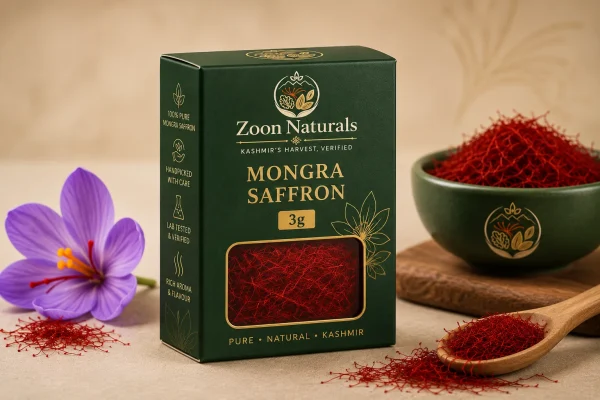
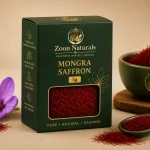
Kashmir saffron carries a Geographical Indication tag, registered in 2020 with the GI Registry of India, precisely because the crop from Pampore’s karewa fields is chemically distinct, with deeper color and stronger aroma than most saffron traded globally. Our Mongra saffron comes from those fields, and every pack carries a batch code you can verify against a lab report before you brew a single cup.
Start with the 2 gram pack. At six threads per pot, it will pour a lot of kahwa.