



A customer once returned a jar of honey because it had “gone solid and spoiled.” That jar was the most natural product on the shelf. The smooth, glassy honey that never changes? That one deserved the suspicion.
Crystallization might be the most misunderstood thing in Indian kitchens, and the confusion costs honest honey producers dearly. Let’s fix that in five minutes.
Why honey crystallizes
Honey is a supersaturated sugar solution, mostly glucose and fructose dissolved in very little water. Supersaturated means it holds more sugar than water can naturally keep dissolved. That state is unstable by definition, so given time, the glucose does what physics demands: it comes out of solution and forms crystals.
How fast depends on the flowers the bees visited. That is the part almost nobody knows:
- High glucose honeys like mustard and sunflower can crystallize within weeks. Totally normal.
- High fructose honeys like acacia stay liquid for a year or more. Also totally normal.
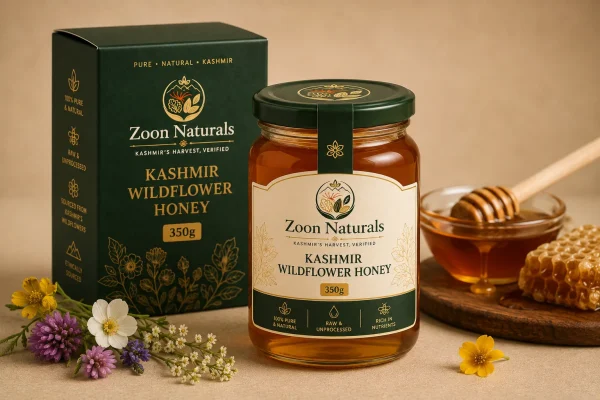
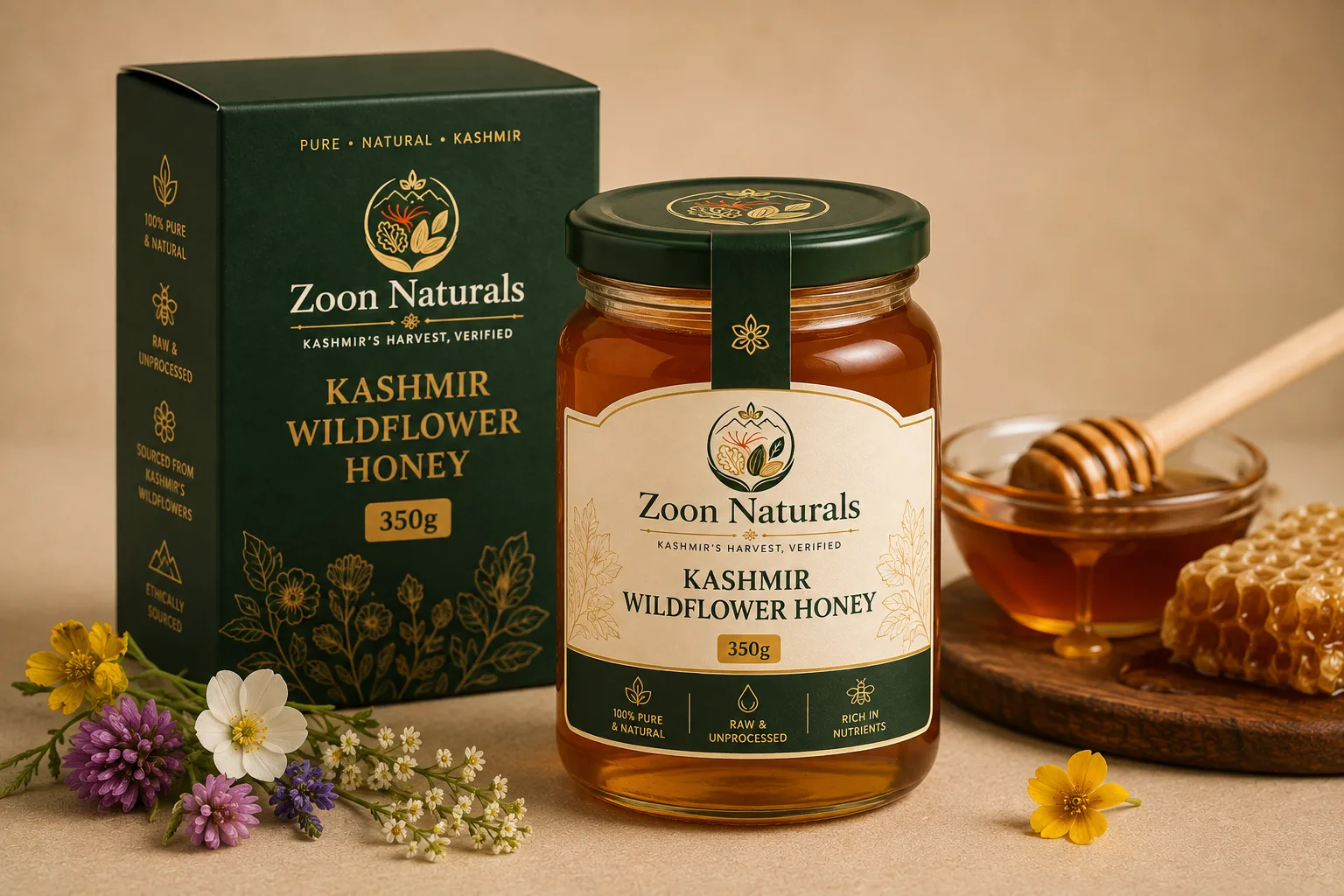
- Multifloral mountain honeys, like our Kashmir wildflower honey, sit in between and usually set in the cold months.
Temperature matters too. Below about 15 degrees, crystallization speeds up, which is why honey sets faster in a Kashmiri winter than in a Chennai kitchen.
Crystallized honey is a good sign, not a defect
Here is the industry secret. Commercial honey is heated to high temperatures and pressure filtered precisely so it will not crystallize on a store shelf, because shoppers read crystals as spoilage. That processing keeps the jar pretty, and it damages the very things people buy raw honey for: enzymes like diastase and invertase, pollen, and the delicate aromatics.
So the logic flips. Honey that crystallizes naturally is behaving like the raw agricultural product it is. Honey that stays perfectly liquid for two years has usually been processed hard, or worse, stretched with syrup.
The syrup problem in India
In 2020, the Centre for Science and Environment ran a now famous investigation where most major Indian honey brands failed an advanced NMR purity test, pointing to sophisticated sugar syrups designed to pass standard checks. The market has tightened since, but the lesson stands: clear, never-setting, suspiciously cheap honey earned its low price somehow.
Basic home tests (water glass, flame, thumb) are folk wisdom and catch only crude dilution. Real assurance comes from batch-level lab testing, which is why every jar we sell carries a code you can check against its report.
How to bring crystallized honey back to liquid
- Place the jar in a bowl of warm water, around 40 degrees, comfortable to your hand.
- Stir every few minutes and top up the warm water as it cools.
- Stop as soon as it flows. Fifteen to twenty minutes usually does it.
Never microwave it and never boil the jar. That cooks the enzymes and turns raw honey into the processed honey you paid extra to avoid. Or skip the melting entirely: set honey spreads on a warm girda like soft butter, and plenty of our customers prefer it that way.
The takeaway
Crystals mean chemistry, not cheating. Judge honey by its source, its testing, and its flavor. Our wildflower honey comes from hives in Budgam’s meadows, bottled raw, never heated, never pressure filtered, and it will probably set this winter. When it does, you will know exactly why, and you can warm it back or spread it thick on your morning bread with a cup of kahwa.