

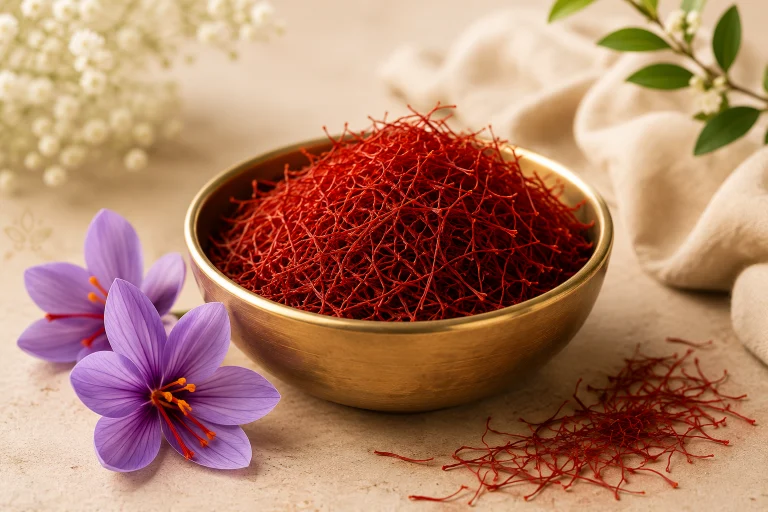
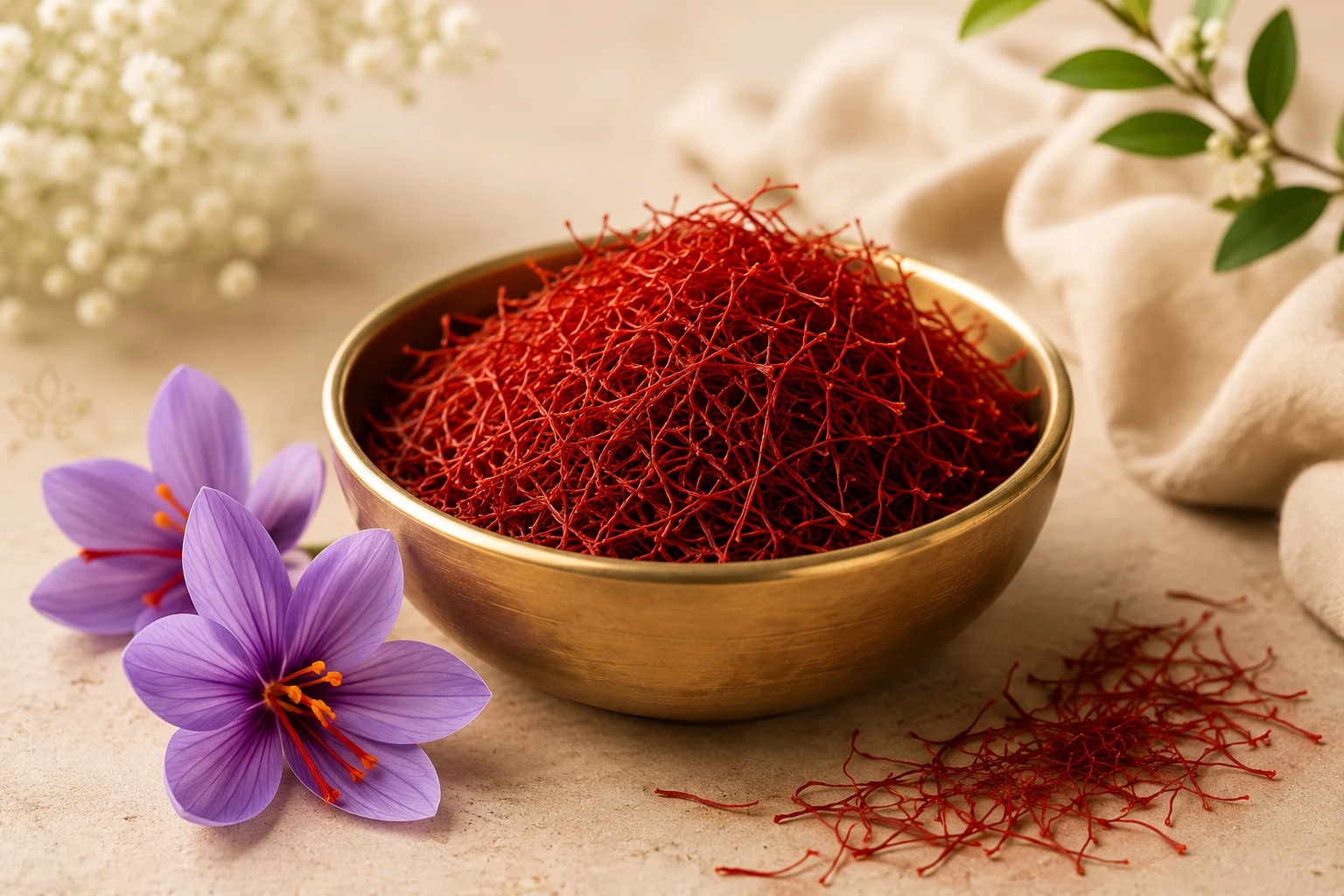
Kesar doodh is probably the first way most Indians ever taste saffron. A grandmother warms milk, drops in a few threads, waits for the gold to spread, and hands it over with total confidence in what it does.
Was she right? Partly, yes. Let’s separate what saffron milk genuinely offers from what got added by word of mouth, and then make it properly, because most people make it wrong.
What is actually in those threads
Saffron owes its effects to three compounds: crocin (color), picrocrocin (taste), and safranal (aroma). If you want the fuller chemistry, we broke it down in plain language in our guide to what the lab numbers mean.
The interesting part is what modern trials say. Multiple randomized studies, several summarized on PubMed, have tested saffron extract at around 30 mg per day for mild to moderate low mood, with results that repeatedly beat placebo in small trials. There is early work on sleep quality and PMS symptoms too. The honest caveats: the studies are small, they use standardized extracts rather than kitchen threads, and saffron is not a treatment for depression or insomnia. Interesting evidence, modest claims. Anything stronger is marketing.
Saffron milk in pregnancy
This is the biggest reason kesar doodh gets bought in India, so let’s address it directly. The tradition of saffron milk in the second and third trimester is old and beloved. The claim that it makes the baby fair is folklore with zero scientific basis, and it deserves retirement.
What matters is safety. Culinary amounts, a few threads in milk, are generally considered fine in pregnancy. Large doses are not, and very high doses can be dangerous. Stay in the range of 2 to 4 threads a cup, not more than once a day, and clear it with your doctor like anything else you take while pregnant. That is the whole story, told straight.
The right way to make kesar doodh
The mistake everyone makes: dropping saffron into boiling milk and drinking it two minutes later. The threads barely open, the color stays trapped, and you drink plain milk with expensive garnish.
- Take 3 to 4 threads per cup. That is enough. Our dosing guide covers every dish, and milk sits at the low end.
- Soak the threads in 2 tablespoons of warm milk for 15 to 20 minutes. Watch the gold bleed out. That soak is where the drink is made.
- Warm the rest of the milk gently. Do not boil it with the saffron in it; high heat degrades safranal, the aroma compound.
- Combine, add a little honey or sugar, cardamom if you like, and the soaked threads themselves. Drink warm, ideally an hour before bed.
Why the saffron itself decides everything
Milk is a merciless test. There are no spices to hide behind, so weak or fake saffron shows up immediately: no aroma, a flat yellow color that appears instantly (dye) or never (exhausted old stock).
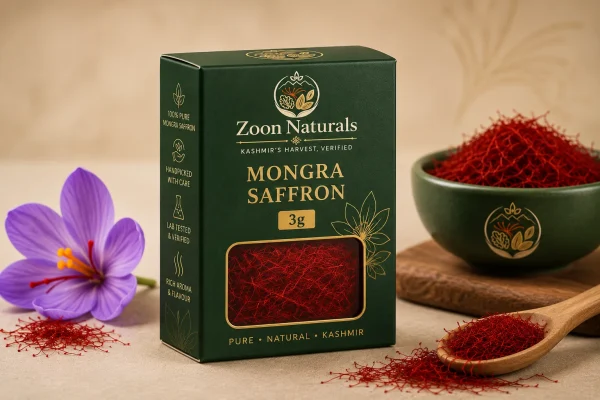
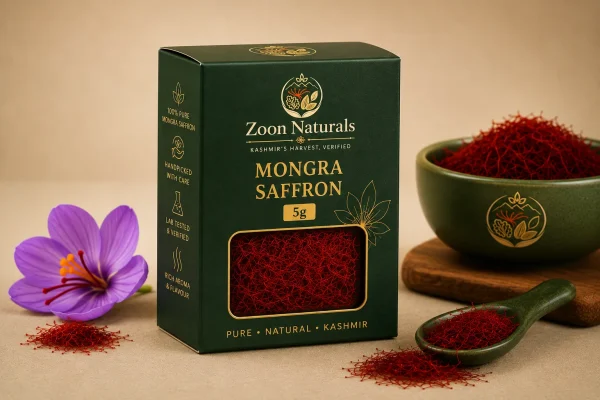
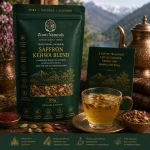
Real Mongra saffron, the all-stigma grade we explain in our grades guide, releases color slowly over the soak and fills the cup with aroma before you taste it. Ours is grown in Pampore and lab tested batch by batch; the 3 gram pack makes well over two hundred cups of kesar doodh at four threads each. For a family that drinks it nightly, the 5 gram tin works out cheaper per cup.
One cup a night, made with a proper soak and threads you can verify. That is kesar doodh done right, and it needs no exaggeration to be worth the ritual.