


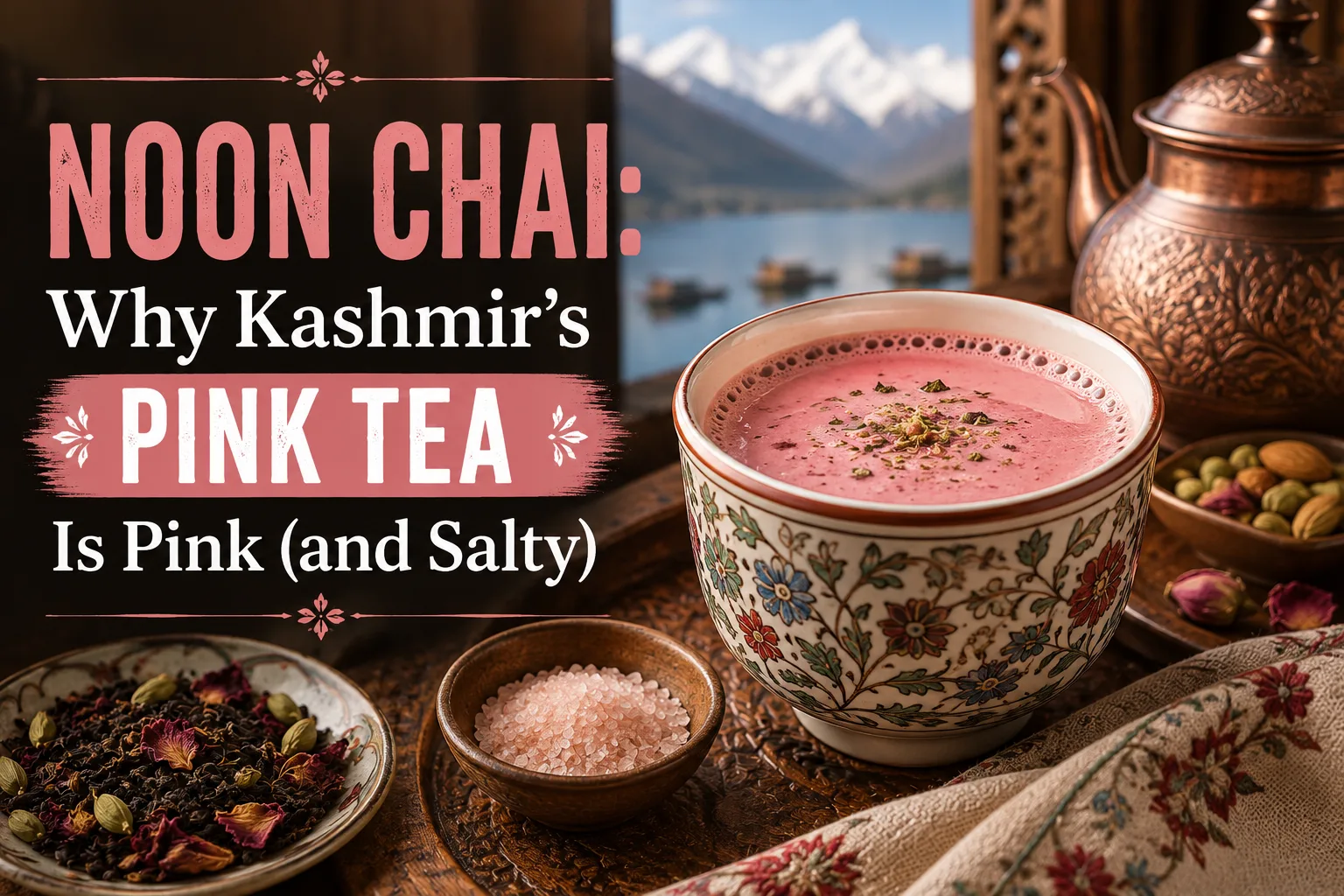
Every winter, someone tastes noon chai for the first time, expects something like strawberry milkshake, and gets a salty, buttery cup of tea instead. The color sets up one expectation. The first sip breaks it.
Here is the thing though. Nobody in Kashmir adds pink color to noon chai. The pink comes from chemistry you can run on your own stove, and once you understand it, you will never fail a batch again.
Why noon chai is pink
Three things make it happen:
- The right leaves. Noon chai uses a specific green tea, sold in Kashmir as sheer chai leaves. Regular tea bags will not turn.
- Baking soda. A pinch of soda makes the brew alkaline. In alkaline water, the pigments in the leaves shift from green toward a deep burgundy red.
- Aeration and cold shock. The brew is ladled high and poured back into the pot, again and again, then hit with cold water or ice. This locks in the red base. Add milk and the red dilutes to that famous dusty pink.
Salt goes in at the end. Noon literally means salt in Kashmiri, so the name tells you the recipe was never sweet.
The recipe, for four cups
- Boil 2 tablespoons of noon chai leaves in 2 cups of water with a quarter teaspoon of baking soda and 2 crushed green cardamom pods.
- Simmer hard for 10 to 15 minutes until the liquid turns deep red and reduces by a third.
- Aerate. Ladle the brew up and pour it back from a height, 15 to 20 times. This is the step everyone skips and it is the step that builds the color and body.
- Add 1 cup of cold water, bring it back to a simmer, then add 2 cups of full fat milk.
- Simmer 5 more minutes, salt to taste, and serve topped with crushed walnuts or almonds.
If your chai refuses to turn pink
Run through this checklist:
- Wrong leaves. This causes most failures. Black tea or ordinary green tea will give you brown, every time.
- Too little simmering. The red base needs a real rolling boil to develop before any milk goes in.
- No soda. Without the alkaline shift there is no red, only green-brown.
- Milk too early. Adding milk before the base is fully red freezes the color where it is.
What noon chai means in Kashmir
In the valley, noon chai is not a specialty drink. It is breakfast. It shows up twice a day in most homes, poured from a samovar and eaten with fresh bread from the local kandur: girda, lavasa, or a sesame-crusted tsochwor. In winter weddings, a copper samovar of noon chai is as fixed a feature as the wazwan itself.
The salt is not a quirk. At altitude, in cold weather, a warm salty drink with fat from milk makes physiological sense, the same logic behind Tibetan butter tea. Kashmir sits on the same Himalayan corridor, and the drink likely traveled the trade routes along with gucchi, saffron, and pashmina.
Kahwa or noon chai?
People lump them together because both come from Kashmir and both pour from samovars. They could not be more different.
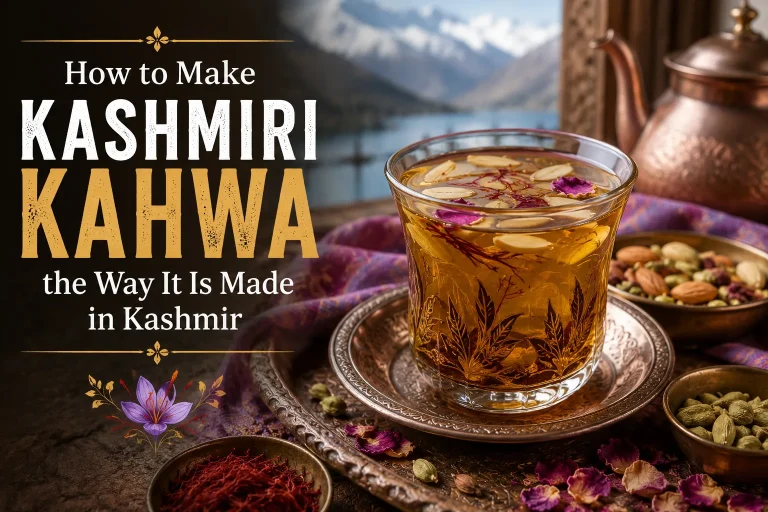
- Kahwa: green tea, saffron, spices, no milk, served sweet. Light, aromatic, an after-meal drink. Here is the full kahwa method.
- Noon chai: fermented pink brew, milk, salt, butter in some homes. Heavy, warming, a breakfast drink.
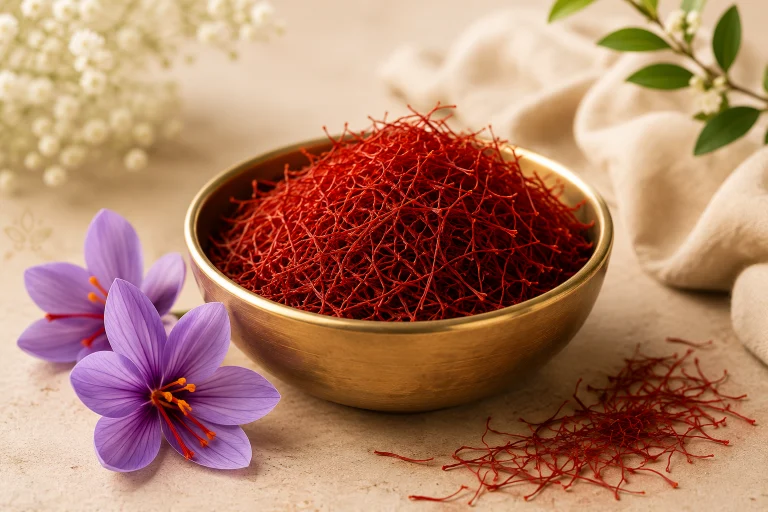
Our advice: keep both in the kitchen. Kahwa for guests and quiet evenings, noon chai for cold mornings when toast and tea will not cut it. If you want the real leaves and a blend that turns properly pink, watch our shop. Kehwa mixes and the noon chai blend are joining the saffron and dry fruits soon, and everything we pack ships across India with a batch code you can check yourself.