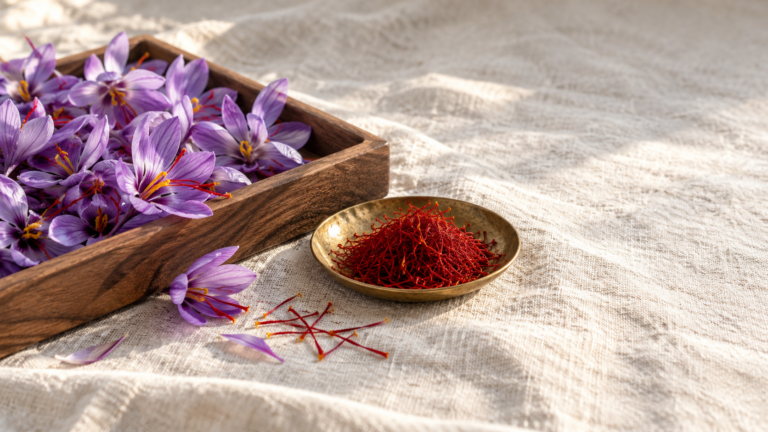
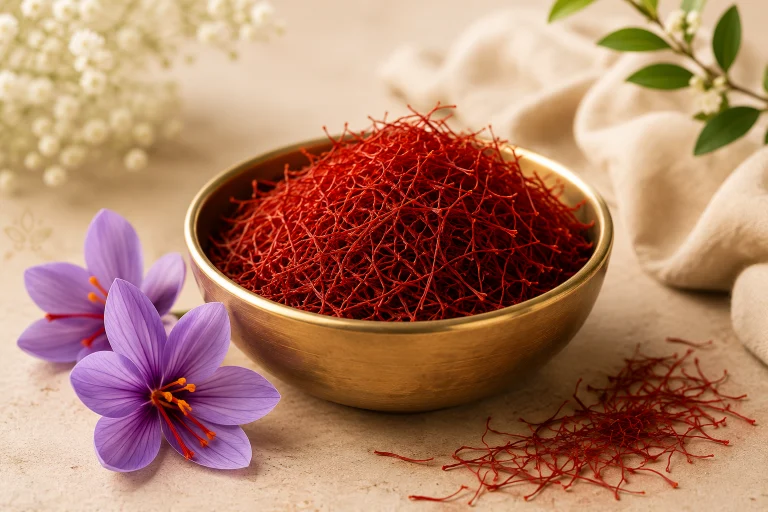
Everyone knows Kashmir for saffron and dry fruits. Almost nobody outside the region knows the pantry that actually feeds a Kashmiri household through five months of winter. That pantry is one of India’s great food traditions hiding in plain sight, and its staples are slowly becoming available to the rest of the country.
Here are four things worth knowing before the rest of India catches on.
Bhaderwah rajma: the small bean with a big reputation
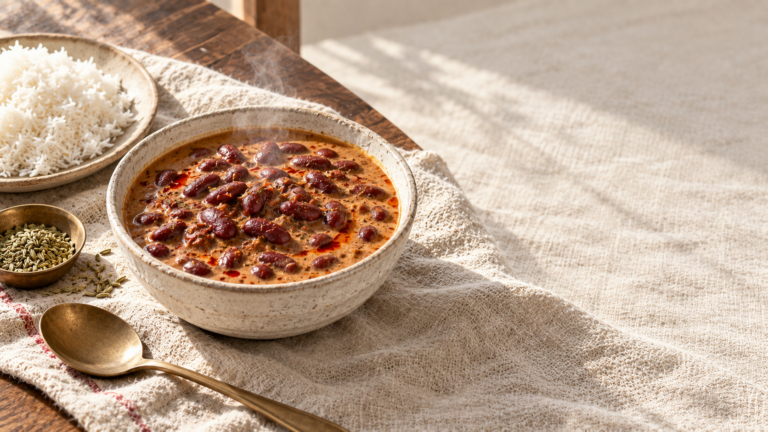
Ask anyone from Jammu about rajma and the conversation goes to Bhaderwah, a valley in Doda district where small, deep red kidney beans grow at altitude on mountain streams. They are smaller than the rajma in most kitchens, noticeably sweeter, and they cook to a creaminess that ordinary beans need cream to fake.
This is not just local pride. Bhaderwah rajma holds a Geographical Indication tag, registered with the GI Registry of India, the same protection Kashmir saffron earned in 2020. The classic preparation on the Jammu highway, rajma with rice and a spoon of ghee, needs nothing else. If your rajma chawal has only ever used flat-land beans, the Bhaderwah version is a genuine upgrade, not a variation.
Hokh syun: Kashmir’s original preserved food
Before cold storage existed, Kashmir solved winter the obvious way: it dried summer. Hokh syun, literally dried vegetables, is the collective name for sun-dried turnips, bottle gourd, brinjal, tomatoes, and greens, strung up in autumn and cooked through the snowed-in months.
Drying concentrates flavor the way it does in sun-dried tomatoes, which the world happily pays a premium for. A winter dish of dried gourd cooked with rice feels smoky and deep in a way fresh vegetables cannot reproduce. It is peasant food in the best sense, and chefs are starting to notice it the way they noticed gucchi a decade ago.
Nadru: lotus stem from the Dal and Wular
Lotus stem grows in the lakebeds of the Dal and Wular, harvested by hand from under the water. Crunchy even after long cooking, it anchors two of the valley’s best loved dishes: nadru yakhni, where it simmers in a saffron-tinted yogurt gravy, and crisp nadur monje, the street snack Srinagar eats on winter evenings.
If you cook it at home, slice it on the diagonal, wash the channels well (silt hides inside), and give it time. It rewards patience like no other vegetable.
Ver masala: the spice cake that seasons everything
Walk through old Srinagar and you will see dark red discs drying on windowsills. That is ver (or wari) masala: Kashmiri red chillies, garlic, shallots, and whole spices pounded into a cake and aged. A piece crumbled into a pot is the shortcut to authentic rogan josh color and depth, and it is the reason a Kashmiri home cook seasons a curry in one movement.
Kashmiri chilli itself deserves its reputation: deep red color with gentle heat, which is exactly what most Indian home cooking wants more of.
Why we are bringing these to the shop
Our plan for the Zoon Naturals shop has always been bigger than saffron. The gucchi and exotic foods line will carry Bhaderwah rajma, hokh syun, and dried lotus stem, and the spice line brings ver masala, Kashmiri chilli powder, and shahi jeera, with the same rule that governs our saffron and honey today: named origin, batch code on the pack, lab report you can read yourself.
Kashmir’s pantry fed families through winters that lasted half the year. It will handle your kitchen just fine.