
Dried gucchi sells for 15,000 to 30,000 rupees a kilo in a good year. That makes it one of the most expensive foods in India, ahead of silver by weight some seasons, and people’s first reaction is always the same: for a mushroom?
Yes. And once you know how a single gucchi reaches your kitchen, the price stops looking like a scam and starts looking almost reasonable.
You cannot farm gucchi
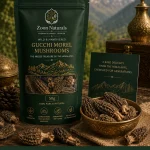
Gucchi is the morel, a wild mushroom of the Morchella family with a honeycomb cap that no one has managed to cultivate commercially at scale in India. It fruits on its own schedule: for a few weeks in spring, after the snow melts, in the forests of Jammu and Kashmir, Himachal, and Uttarakhand, usually between 2,000 and 3,000 meters.
There is no orchard, no seed, no harvest calendar you can count on. A wet winter and a warm spring produce a good flush. A dry year produces almost nothing, and prices jump accordingly.
The labor math nobody sees
Whole families in mountain villages walk forest slopes for hours to find them, one mushroom at a time, often in terrain with no roads. A full day of searching might yield a few hundred grams of fresh morels.
Then comes the brutal ratio: morels are mostly water. Roughly 10 kilos of fresh gucchi dry down to 1 kilo of the dried product you buy. Add sorting, grading by size, and the chain of hands between a forest in Doda and a shop in Delhi, and the price builds honestly, step by step.
What you are paying for, in flavor terms
Gucchi has a deep, smoky, almost meaty flavor that cultivated button mushrooms cannot approach. The honeycomb cap soaks up gravy like a sponge, which is why Kashmiri and Dogri cooking treats it as a centerpiece, not a garnish. It headlines wedding dishes for a reason.
How to cook dried gucchi without wasting it
- Soak in warm water for 20 to 30 minutes until soft and springy.
- Keep the soaking water. Strain it through a fine cloth and it becomes stock, carrying half the aroma. Throwing it away is throwing money away.
- Slit each morel lengthwise and rinse the honeycomb. Grit hides in the pits, and one sandy bite ruins the dish.
- Cook simply. Gucchi pulao, a cream-based gucchi matar, or a yakhni. Strong masalas bury the flavor you just paid for.
Twenty grams of dried gucchi, about 8 to 12 pieces, is plenty for a pulao that serves four. At that rate, a 100 gram pack is five family meals, which reframes the price per dinner to something closer to a good cut of meat.
Buying gucchi without getting cheated
- Check the stem cut. Honest sellers trim stems; heavy stems add weight, not flavor.
- Beware of very cheap gucchi. Imported look-alike morels and even carved, dyed fakes circulate. If the price is half the market rate, the product usually is too.
- Smell it. Real dried morel smells smoky and earthy. No smell means old stock that was dried years ago.
- Size matters less than intactness. Whole, unbroken caps beat big broken ones. Powdery fragments at the bottom of a jar are a bad sign.
Where we fit in
Gucchi is exactly the kind of product our lab-first model was built for: expensive, easy to fake, and sold on trust. When our gucchi and exotic foods line goes live in the shop, every pack will carry the same batch code system our saffron ships with today, so you can check what you bought instead of taking our word for it.
Until then, if you find honest gucchi this season, buy it, keep the soaking water, and make the pulao. Some foods justify their legend. This is one.