
Loading page
Free delivery on orders over ₹3,000
Free delivery on orders over ₹3,000
Storage and usage · 16 Oct 2026
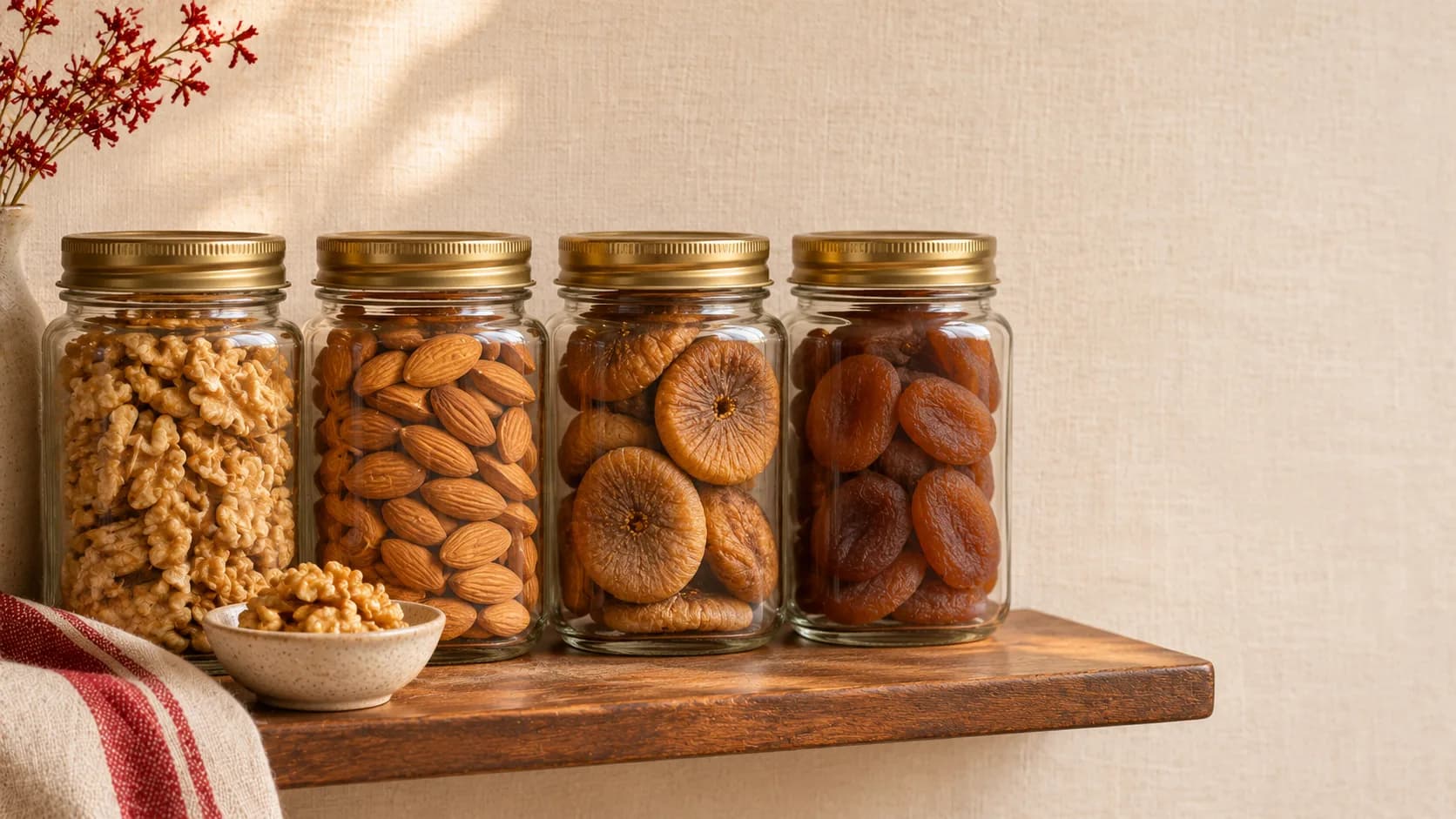
Three weeks after the festive season, you open a gift box of akhrot that smelled fine when it arrived. The first walnut tastes sharp. The second tastes like old paint. The anjeer at the bottom has a pale, fuzzy spot you don't want to think about.
The dry fruit was fine when it arrived. The box, the shelf and the humidity did the rest.
If you want to know how to store dry fruits so they taste the way they did on day one, the answer is simpler than most people think. Four things spoil them: heat, air, light and moisture. Control those, and a jar of walnuts keeps its sweetness for months. In this guide, you'll learn why nuts and dried fruit spoil in different ways, where each one belongs (jar, fridge or freezer), how to handle humid weather, and how to tell when a batch has turned.
Here's the thing: "dry fruits" is one word for two very different foods.
Nuts spoil through their oil. Walnuts, almonds and chilgoza are rich in natural fats. When those fats meet warmth and air, they oxidise, and the nut turns bitter. A study of vacuum-packed walnut kernels, published in LWT, Food Science and Technology, found that markers of rancidity rose significantly at 30 °C over 12 months. At 20 °C, the same packs held up for the full year. The researchers also found temperature mattered more than the packaging material.
Think about what that means in an Indian kitchen. A shelf near the stove in May sits well above 30 °C for weeks.
Dried fruit spoils through moisture. Anjeer, apricots and cherries are already low in water. Give them a humid kitchen and an open lid, and they pull moisture back in. That's when they turn sticky, then soft, then mouldy. The Codex code of practice for tree nuts, the international standard food regulators use, notes that aflatoxin-forming moulds can't grow below a water activity of 0.7, and it recommends keeping storage humidity under 70 per cent where possible.
So the rule splits in two. Keep nuts cool. Keep dried fruit dry.
Not every dry fruit needs the fridge. Here's how to sort your box.
Walnuts (akhrot): fridge, always, once the pack is open. Extension advice from the University of Florida puts walnuts you'll use soon in the fridge and anything you'll keep longer than a month in the freezer. They also absorb smells, so keep them away from onions and pickles. Our own Kashmiri walnut kernels carry the same instruction on the product page: once the pouch is open, keep it sealed in the fridge.
Almonds, including mamra: an airtight jar in a cool, dark cupboard works for weeks. Move them to the fridge in summer or if you're keeping them longer. Mamra badam, a high-oil almond, still behaves like an almond, slower to turn than walnuts but not immune.
Chilgoza (pine nuts): fridge. They're small, oily and expensive, which is the worst combination for room-temperature storage.
Anjeer (dried figs): jar in cool weather, fridge in humid weather. Plain-dried figs like our anjeer, with no syrup coat, are soft by nature and will pick up moisture fast during the monsoon.
Dried apricots and cherries: an airtight jar in a cool, dark spot. Refrigerate after opening if your kitchen runs hot or humid.
Want a rough clock? The UC Master Food Preservers give shelled nuts about 3 months at room temperature, 6 to 9 months in the fridge, and more than a year in the freezer. For dried fruit, the Academy of Nutrition and Dietetics suggests six months to a year unopened in a cool pantry, and one to three months once opened, longer if refrigerated.
Treat those as outer limits, not targets. The best-before date on your pack always wins.
You don't need special equipment. You need a routine. Here's the one we'd follow in any kitchen.
Decant the gift box on day one. Decorative trays and thin plastic boxes aren't built to keep air out. Move each dry fruit into its own clean, completely dry glass jar or steel dabba with a tight lid.
Never wash before storing. Water is the enemy here. If you want to rinse almonds or soak figs, do it just before you eat them, never before they go into the jar.
Split big packs. Keep one small jar for the week in the cupboard. Keep the rest sealed in the fridge or freezer. Every time you open a jar, warm air rushes in, so fewer openings means fresher nuts.
Pick the darkest, coolest spot. Not above the stove. Not beside the window. Not on top of the fridge, where the motor throws off heat. A low cupboard on an inside wall is usually best.
Use a dry spoon, every time. A wet hand or a damp spoon brings moisture straight into the jar. That one habit stops more mould than any container.
Mumbai in July, Chennai in November. Humidity is where most Indian dry fruit storage goes wrong.
The Codex guidance above points at the fix. Mould needs moisture, and it grows faster in warmth. Your job is to cut both. In practice:
Move figs, apricots, cherries and raisins into the fridge for the season, in airtight jars, not loose bags.
Let cold jars come to room temperature before you open them. Open a cold jar in a humid kitchen, and water condenses on the fruit.
Check your jars once a week. Stickiness is the first warning.
A food-safety guide from Food Safety Helpline makes the same point plainly: improper storage invites moulds and yeasts, so keep dry fruit dry and buy packed products carrying an FSSAI licence number.
A lot of people avoid the fridge because their almonds once came out soft and smelling of last night's sabzi. Fair. But that's a container problem, not a fridge problem.
Nuts are sponges for smell. Dried fruit is a sponge for moisture. A loose polythene bag in the fridge gives both a free pass. A glass jar with a proper seal doesn't.
The result? Cold slows the oil from turning, the seal keeps out smell and damp, and your walnuts stay walnuts.
One more thing on freezing. Walnuts, almonds and chilgoza freeze well because they hold so little water. Freeze them in small portions, take out what you need, and don't refreeze. Most dried fruit doesn't need the freezer at all.
Your nose is the best tool you own. Use it before your teeth.
Rancid nuts smell sharp, like old oil or paint, and taste bitter at the back of the tongue. The University of Florida's advice is blunt: if walnuts smell like paint thinner, throw them away.
Spoiled dried fruit shows itself in a few ways. Look for:
Fuzzy white, green or grey spots.
A sour or fermented smell.
Stickiness that wasn't there before.
Live insects or fine webbing in the jar.
If you see mould on one piece, throw out the whole jar. Mould can spread further than you can see.
Colour is a different story. Untreated apricots dry brown. That's normal. Bright orange apricots usually owe their colour to sulphur dioxide treatment, which the same Food Safety Helpline guide lists as a common preservative in dried fruit. Our sun-dried apricots are brown for exactly that reason: no sulphur, stones left in.
Storage can only protect what you start with. A walnut packed last year and kept on a warm shop shelf has already used up most of its life before it reaches your jar.
Here's what to check when you buy:
The pack date, not just the best-before. On our dry fruit pages, the month and year of packing is printed on every pack, and best-before periods run from 6 months for chilgoza to 12 months for walnuts, figs and apricots.
The FSSAI licence number on the label.
Colour and smell. Light walnut kernels, plain brown apricots, figs without a glossy syrup coat.
We wrote more about why fresh, rain-fed kernels taste different in our guide to Kashmiri walnuts, and if you're sorting through a hamper right now, our post on choosing a dry fruit gift hamper covers what to look for before the box arrives. The same cool, dark, airtight logic applies to saffron, which we cover in how to store saffron.
Dry fruits don't go stale. They go warm, wet or exposed. Nuts need cold. Dried fruit needs dry. Both need a lid that actually seals.
If your nuts will be finished within a few weeks, an airtight jar in a cool, dark cupboard is enough. If you're keeping walnuts or chilgoza longer, move them to the fridge, or the freezer past a month. If the monsoon has arrived, bring figs and apricots into the fridge too. And if something smells sharp or shows fuzz, let it go.
If you want dry fruit that arrives fresh enough to be worth storing well, explore our Kashmiri dry fruits and nuts.
Yes. Nuts like walnuts, almonds and chilgoza keep longer in the fridge, and dried figs and apricots benefit from it in humid weather. Use airtight glass jars so they don't absorb moisture or smells.
As a rough guide, the UC Master Food Preservers suggest about 3 months at room temperature for shelled nuts, 6 to 9 months in the fridge and over a year in the freezer. Opened dried fruit is best used within 1 to 3 months unless refrigerated. Always follow the best-before date on the pack.
Keep shelled walnuts in an airtight container in the fridge once opened, and in the freezer if you'll keep them longer than a month. Store them away from strong-smelling foods. If they smell like paint or old oil, they've gone rancid and should be thrown away.
Move dried figs into a clean, dry, airtight jar. In cool, dry weather a dark cupboard works. In humid weather, keep the jar in the fridge and check it weekly for stickiness or mould.
Often it's natural sugar that has risen to the surface, which looks dry and powdery. Mould looks fuzzy and may be green, grey or white with a sour smell. If you're unsure, throw the figs out.
Taste the difference yourself.
Mongra saffron and fresh-crop dry fruits, sealed to order in Anantnag.
Shop the harvest